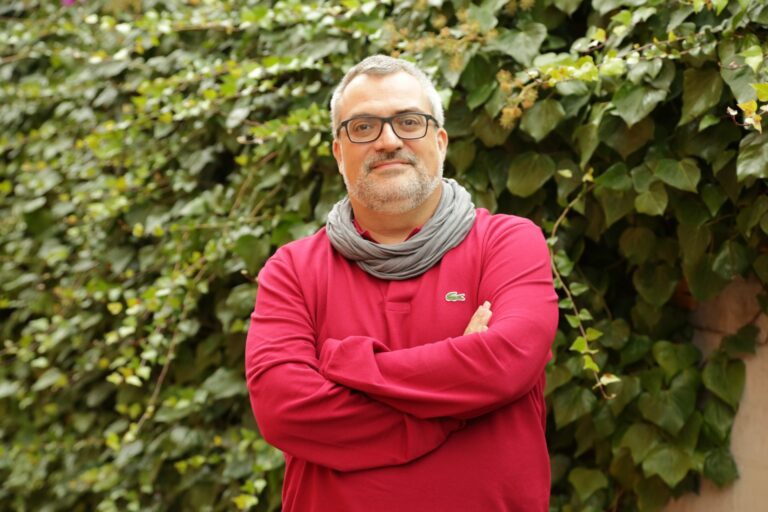
As Director of the Consortium for Continuing Education of Catalonia, what do you consider to be the main future challenges for continuing education?
As an institution, we have a purpose that we want to share with all the stakeholders involved in continuing education in Catalonia. It is: “To offer training opportunities for everyone, throughout their lives and across the entire territory.” I believe this summarizes our objective well. Catalonia’s wealth lies in its people—those of us who have always lived here and those who have just arrived. Investing in talent means creating the conditions that allow everyone to develop their abilities to the fullest. Addressing this challenge is vital for two reasons. First, because it enables everyone to carry out their life project according to their own interests and skills; and second, because our national community benefits from the contribution of all its members to the common good. At the Consortium, we believe that education is our society’s greatest investment in a globalized and changing world to achieve the shared prosperity we desire.
What are the most critical skills for improving workers’ employability in the current context of economic and labor market transformation?
Richard Florida explains in his books that a country or city wishing to prosper in the current context must know how to invest in and combine the three Ts. The first refers to Talent—everyone’s talent. We already discussed this in the previous question. The second refers to Technology—whatever is needed for everyone to develop their talent and be efficient at work. The third, Tolerance, could be represented as the ability to manage complexity, especially the diversity of backgrounds and temperaments. I would add a fourth T: Toil. Work that must be intensive, intelligently planned, and adequately remunerated.
How does the Consortium adapt its training offer to respond to the changing needs of companies and workers?
The Consortium has created its own ecosystem with the group of entities that provide their training and professional guidance services. It is a kind of learning community. Throughout the year, through the Permanent Update Groups, the curricula of the existing training offer are analyzed to try to avoid a gap between the courses offered and the often-changing reality of professional sectors.
How does the reorganization of vocational training into a single system affect the continuing education of workers and the Consortium’s activities?
The existence of a single vocational training system has been a desideratum since time immemorial. However, there is still a long way to go in this regard. Especially to eliminate duplications and increase efficiency.
In recent years, the Consortium has incorporated professional guidance programs for workers. How would you assess these initial experiences?
Our assessment is very positive; in the first three calls of the “Projecta’t” program, more than 30,000 employed workers have received professional guidance. In fact, there is a virtuous triangle that should guide our work. It consists of guidance, training, and the accreditation of skills, in that order. Providing guidance to employed workers is vital for defining a professional career and making decisions about the appropriate training to undertake, in accordance with the demands of professional sectors and personal training needs. “Projecta’t” is the embodiment of this.
What is the level of participation of self-employed individuals and micro-enterprises in the programs promoted by the Consortium? How could this participation be boosted?
The bulk of our current offer is aimed directly at workers. Our goal is to ensure that no one is left out due to mobility issues or a lack of qualified options, and territorial reach is a clear priority. Small and micro-enterprises should organize themselves by sector to use the credit available to them for company-scheduled training, known as “subsidized” training, and thus offset training costs against Social Security payments. The Consortium has developed materials for social partners to promote the use of these resources, which are very necessary for Catalonia.
Autoocupació’s motto is “I am what I want to be.” And you? Are you?
I try to get close to what I would like to be. It is more of a compass than a permanently acquired condition.