Why is training key in a changing world?

22 September 2025

When we talk about social and economic transformation, concepts such as digitalization, artificial intelligence, or sustainability often come to mind. But there is a cross-cutting and essential element to face these challenges: training. If there is a metaphor that exemplifies this, it is that of a tree that, to grow strong and resilient, needs deep roots and flexible branches. Just as a tree adapts to the wind without breaking, people need continuous training to grow, evolve, and face the constant changes in our environment.

1- Adapting to a changing labor market

The world of work is transforming at a breakneck pace. Professions that once seemed secure have become obsolete and, at the same time, new ones appear every year. Training helps us update knowledge and skills to remain relevant; therefore, if we do not learn constantly, we run the risk of falling behind. Training is the key to staying competitive and opening up new professional opportunities.

2- Reinventing oneself in the face of crises

An economic crisis, a technological change, or a new consumption model can turn our professional career upside down. Learning new skills is the first step to being able to reinvent ourselves and open doors in other sectors. Training is not just an investment; it is insurance against uncertainty. It allows us to move from seeing an obstacle to discovering a new path.

3- Making decisions with sound judgment

Training does not only mean acquiring technical knowledge, but also learning to think critically, analyze information, and make informed decisions. This is essential both for starting a project and for growing within an organization. People with trained judgment are more autonomous and capable of leading their professional future.

4- Training opportunities for everyone

Today, more than ever, training is available to everyone and in very diverse formats: – Vocational training and professional certificates to acquire skills directly linked to a profession. – Online courses (MOOCs, webinars, micro-credentials) that allow learning at any time and from anywhere. – Universities and specialized master’s degrees to deepen technical or management knowledge. – In-person workshops and seminars to improve practical skills and network. – Support and mentoring programs to guide professional development. It is not just about “having a degree,” but about acquiring the tools to continue learning throughout life.

5- Learning with and from others

Just as a tree does not grow alone—it needs water, light, and nutrients—training is more powerful when we have support networks and learning communities. Sharing experiences, establishing contacts, and collaborating accelerates professional growth. Training is also about making a journey with other people. Collective learning multiplies results. In a world that changes every day, training is not optional; it is vital. Not only to find or keep a job, but to grow as individuals, face challenges with confidence, and build the future we truly want. Because the question is not whether we should learn, but how far we want to go, and this path leads us to say with confidence: I am what I want to be.

Share

28/07/2026

Youth Guarantee 2026: Up to €17,094 to Launch Your Self-Employment Project

If you are between 18 and 29 years old and want to start your own business, the Youth Guarantee grant can help turn your entrepreneurial project into reality. This financial aid is designed to support young people entering the labour market through self-employment by providing funding for both the start-up of their business and the

28/07/2026

What Are Reskilling and Upskilling? Learning to Adapt to Change

The job market is evolving at an increasingly rapid pace. Digitalisation, new ways of working, and the constant emergence of new technologies mean that professional skills must continuously evolve. In this context, concepts such as reskilling and upskilling have become essential for maintaining employability and successfully facing new professional challenges. But what do these terms
27/07/2026

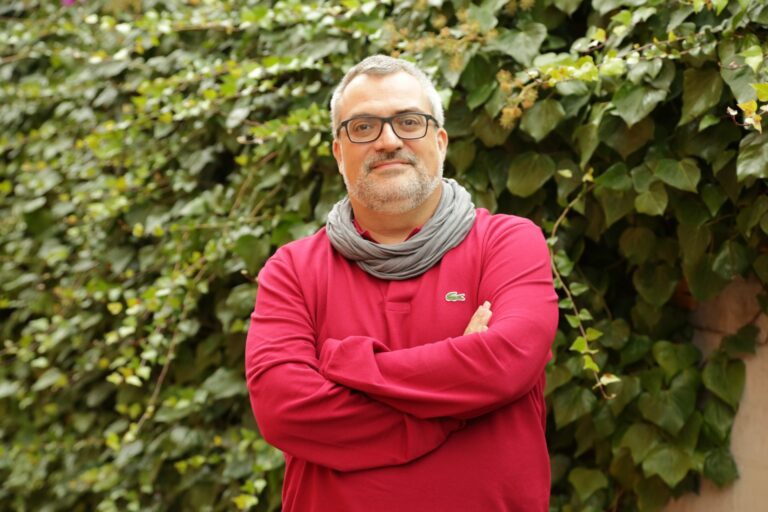
Interview with Miquel Àngel Prats Fernández, Teacher, Educational Psychologist, and PhD in Education

1. After more than two decades of experience, how would you say the way we understand education and training in Catalonia has evolved? What have been the most significant changes? I believe we have moved from viewing education and training as a stage of life to understanding them as a continuous process. Twenty years ago,

15/07/2026

Catalan Government Opens the 2026 Grant Call to Strengthen Representative Organizations in the Retail Sector

The Government of Catalonia, through the Consortium for Trade, Crafts and Fashion (CCAM), has launched the 2026 Support Program for Representative Organizations in the Retail Sector, a grant scheme designed to enhance the competitiveness of Catalonia’s retail industry by strengthening its leading sector organizations. Applications may be submitted from 9:00 a.m. on July 15 until