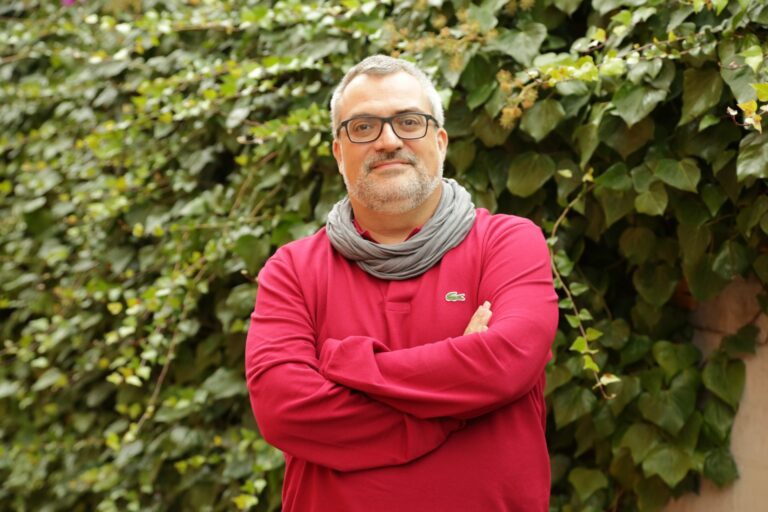
“Self-employment is a real path to autonomy and professional development for many people with disabilities.”
1. What are currently the main areas of work of Inserta Empleo in Catalonia to promote the labor market inclusion of people with disabilities?
At Inserta Empleo, we work with a comprehensive approach to labor inclusion. This means supporting each person with a disability in defining their professional pathway, taking into account their abilities, interests, experience, and life project. We do this through career guidance, training, business intermediation, and follow-up during the hiring and onboarding process.
Our main areas of work are personalized career guidance, employment training—including both soft skills and vocational training—building connections with the business community, and supporting individuals throughout their integration into the workforce.
In addition, self-employment and entrepreneurship are becoming increasingly important as pathways for professional development for many people with disabilities. For many, entrepreneurship is not only an employment alternative but also an opportunity to gain autonomy, make decisions about their future, and turn their talent into a tangible project. That is why, at Inserta Empleo, we also work to open up this path, build confidence, and help transform ideas into real opportunities.
Within this framework, Inserta Empleo implements various support, employment, training, and entrepreneurship programs in Catalonia, co-financed by the European Union through the European Social Fund Plus (ESF+) and Fundación ONCE. These initiatives aim to create real opportunities, strengthen autonomy, and promote effective and sustainable labor inclusion.
2. What type of training do you offer to improve the employability of people with disabilities and adapt to current labor market needs?
Training is an essential driver of employability, but also of confidence and autonomy. At Inserta Empleo, we are committed to practical training that is aligned with labor market needs and adapted to different professional and personal profiles.
We focus on both technical skills—especially digital and technological skills—and transversal competencies that are indispensable today, such as communication, teamwork, planning, autonomy, and adaptability. We also promote vocational training linked to sectors such as customer service, retail and distribution, logistics, and business services, among others.
In this context, I would also like to highlight Per Talent Digital, a particularly relevant initiative that strengthens a key area for employability today: digital and technological skills. Digital transformation is reshaping industries, professions, and ways of working, and it is essential that people with disabilities can access this training on equal terms.
When we talk about entrepreneurship, this training becomes even more valuable. Starting a business requires knowledge, but also tools to imagine a project, shape it, and sustain it over time. That is why it is important to strengthen areas such as idea generation, business models, feasibility analysis, project communication, and basic management skills. The goal is for self-employment to be seen not as a distant option, but as a concrete, accessible, and transformative opportunity for many people with disabilities.
3. Which sectors or professional profiles do you identify as offering the greatest employment opportunities for people with disabilities?
We identify opportunities across a range of sectors, including business services, customer service, retail, logistics, support services, and certain profiles linked to digital environments.
However, beyond traditional sectors, it is also important to recognize opportunities that arise from individuals’ own initiative. Self-employment is opening new possibilities in local services, professional services, e-commerce, creative projects, and initiatives that address specific local needs.
In many cases, entrepreneurship makes it possible to create a tailored job aligned with a person’s skills and unique value proposition. This is particularly important for people with disabilities because it broadens horizons and strengthens professional autonomy.
4. Many companies still struggle to comply with the 2% employment quota for people with disabilities. What are the main barriers or challenges they share with you?
In many cases, the main barrier is a lack of knowledge. There are companies that want to advance inclusion but do not always know how to do so: how to design inclusive recruitment processes, identify suitable candidates, or integrate disability into an open and normalized organizational culture.
Some stereotypes about disability and talent also persist and continue to influence perceptions.
This is why providing information, guidance, and support is so important. At Inserta Empleo, we help companies understand that inclusion is not just a legal obligation but also an opportunity to attract talent, diversify teams, and strengthen corporate culture.
At the same time, it is important to make visible the fact that people with disabilities can not only join companies but also lead their own projects and contribute to the economy through entrepreneurship.
5. How does Inserta Empleo support both candidates and companies throughout the recruitment process?
With candidates, we work on defining professional goals, improving skills, preparing for recruitment processes, and providing follow-up support after hiring. The objective is not only to secure employment but also to ensure that employment is sustainable and that the integration process is successful.
With companies, we provide support in defining job profiles, selecting candidates, and identifying measures that can facilitate a successful onboarding process.
This same support approach is crucial in self-employment. Many people need guidance to validate an idea, assess its feasibility, structure a project, and take the next step with greater confidence. In this context, support is essential to transform an idea into a project and a project into a real opportunity.
Supporting people means providing tools, but also confidence, so they can see themselves as the protagonists of their own professional future.
This entire process is reinforced through Portalento, an accessible platform that facilitates access to employment opportunities, training, and support services, while expanding the resources available to both candidates and employers
6. What message would you send to both companies and people with disabilities to continue moving toward a more inclusive labor market?
To companies, I would say that inclusion is a strategic investment. Hiring people with disabilities means adding talent, commitment, diversity, and new perspectives. It is a way of building organizations that are more representative, innovative, and connected to social realities.
To people with disabilities, I would send a message of confidence: the talent is there, the ability is there, and there are different paths to developing a professional project. One of those paths is entrepreneurship, which can become a powerful tool for autonomy and empowerment.
The most important thing is that every person can choose their own path with support, resources, and equal opportunities.
7. The motto of Autoocupació is “I Am What I Want to Be.” And you? Are you?
It is a very inspiring motto because it speaks about identity, freedom, and possibility. It speaks about the ability to build one’s own project and shape the future through personal decisions. I believe this connects perfectly with the spirit of entrepreneurship.
In my case, I would say that I am on that path through a role that is closely linked to creating opportunities so that other people can also become who they want to be.
True inclusion means guaranteeing rights, autonomy, real opportunities, and accessible environments.